
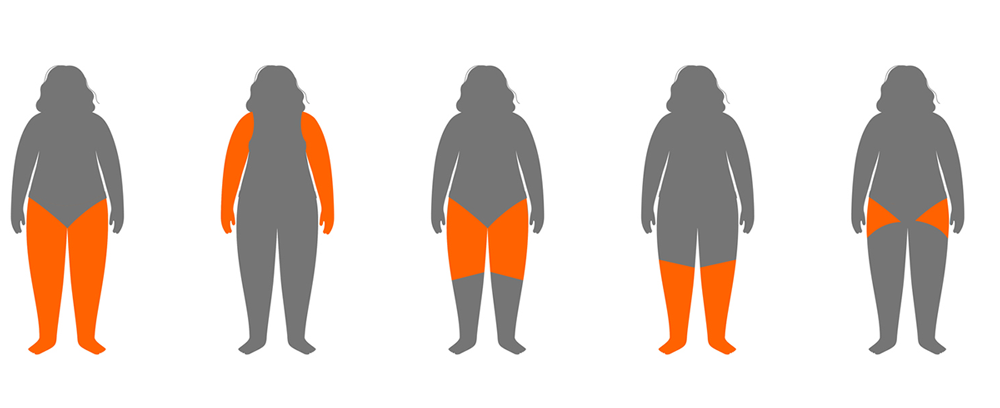
Disclaimer: Please note that Boca Raton Plastic Surgery Center does not currently offer lipedema treatments at this time. This post is provided for educational purposes to help our patients understand the various options available. If you are looking for body rejuvenation, we invite you to explore our available services, including Mommy Makeovers, Smart Lipo or Liposuction.
Lipedema is a chronic and often misunderstood fat disorder that primarily affects women. It causes abnormal fat deposits to build up, most commonly in the legs and sometimes the arms, leading to pain, tenderness and easy bruising. Unlike typical fat lipedema fat behaves very differently, making it resistant to traditional weight-loss methods such as diet and exercise. Understanding why diet and exercise alone cannot cure lipedema is crucial for anyone living with this condition and seeking effective treatment.
What Makes Lipedema Fat Different?
The fat deposits in lipedema are not like the usual subcutaneous fat that responds to calorie restriction or increased physical activity. Instead, lipedema fat is a pathological accumulation of fatty tissue that grows disproportionately in certain areas of the body, especially the lower extremities. This abnormal fat is often painful and can cause swelling, heaviness and reduced mobility.
What sets lipedema apart is that the fat cells themselves are diseased and resistant to shrinking through conventional means. While someone without lipedema may lose fat through diet and exercise, those with lipedema will often see little to no reduction in the affected areas despite their best efforts. This is why many patients become frustrated, as they may maintain a healthy lifestyle yet still struggle with persistent fat deposits and related symptoms.
Common Misconceptions About Lipedema
A widespread myth is that lipedema results from overeating or lack of exercise. In reality, lipedema is a complex medical condition with genetic and hormonal factors. It is not caused by lifestyle choices and cannot be cured by simply eating less or moving more. Recognizing this helps patients avoid unnecessary guilt and seek proper care.
Limitations of Traditional Weight-Loss Methods
Because lipedema fat does not respond to calorie deficits or increased activity, relying solely on diet and exercise will not resolve the condition. This can lead to a vicious cycle where patients feel discouraged and may even blame themselves for their inability to lose fat in certain areas.
Lipedema is also a progressive disease, meaning that without proper treatment, the abnormal fat can continue to accumulate and worsen over time. Traditional weight-loss methods do not address the underlying pathology, so while they are beneficial for overall health, they cannot stop or reverse lipedema fat growth.
The Importance of a Healthy Lifestyle Alongside Treatment
Although diet and exercise alone cannot cure lipedema, maintaining a healthy lifestyle remains essential. Proper nutrition and regular physical activity help reduce inflammation, improve cardiovascular health and support the lymphatic system, all of which can enhance quality of life and aid in managing symptoms.
For lasting relief, many patients turn to specialized treatments such as tumescent liposuction, which directly removes the diseased fat cells. This surgical approach is currently the most effective way to reduce lipedema fat and improve mobility and comfort.
By understanding the unique nature of lipedema fat and the limitations of traditional weight-loss methods, patients can make informed decisions and seek the specialized care they need. While diet and exercise are important for overall well-being, addressing lipedema requires targeted treatment to achieve meaningful and lasting results.